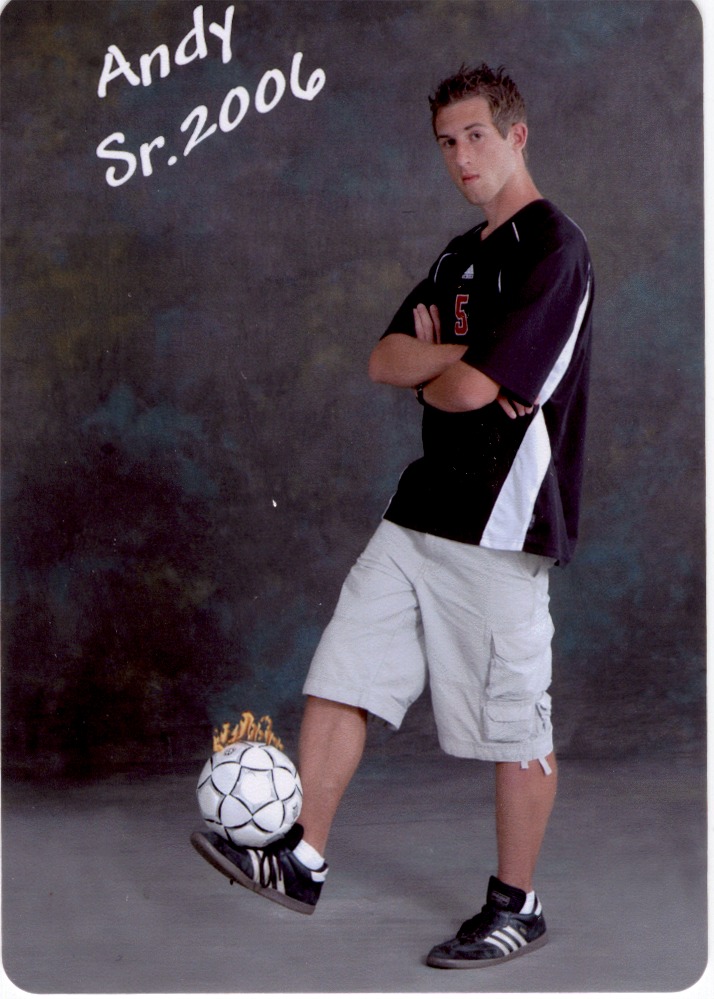
As anyone who knows me can attest, I'm quite the gun rights advocate. I'm the Oklahoma representative for Students for Concealed Carry on Campus, as well as a gun owner. So today I'd like to touch on a topic that's very important to me, the Second Amendment. The text of the amendment is as follows:
"A well regulated Militia, being necessary to the security of a free State, the right of the people to keep and bear Arms, shall not be infringed."
It's strange how 27 words can spark so much controversy. It's also strange, to me at least, that liberals voraciously defend every letter of the Bill of Rights - until you ask them about the Second Amendment. That's when they start to shudder. Why is it that liberals single out this one amendment to oppose? Perhaps they fear that which they do not understand, perhaps they are simply pawns in a misguided movement to ban privately-owned arms, or perhaps they are part of an orchestrated effort to deprive the people of their only means of defense against oppression. I'll not presume to understand their motives, I'm just here to educate the masses.
A short history lesson.
The United State of America was originally nothing more than a British colony. The settlers came in search of new lives with more freedom. What they eventually found was "taxation without representation" and a government whose oppression they could stand no longer.
The American people seized control of the colonies in 1775. They then formed the Second Continental Congress and on July 4th 1776 finalized the text of the Declaration of Independence, which was actually not signed until August 2nd of that same year. There's your fun fact for the day.
As Wikipedia states: "The Declaration justified the independence of the United States by listing colonial grievances against King George III, and by asserting certain natural rights, including a right of revolution." That last part is important. Obviously the Brits didn't take kindly to all this, and so began the American Revolutionary War.
Why all the history? Because history repeats itself, and those who do not learn from it's mistakes are doomed to repeat them. But we'll come back to the history in a bit. For now let's break down the text of the amendment.
"A well-regulated militia, being necessary to the security of a free State,"
The Supreme Court of the United States (SCOTUS) recently decided "[T]he adjective 'well-regulated' implies nothing more than the imposition of proper discipline and training." Proper discipline and training which any parent can bestow on their child. The next big disagreement is what the word "militia" implies. Is it the army of the US, or is it something different, something far greater?
"A militia, when properly formed, are in fact the people themselves...and include all men capable of bearing arms."
Richard Henry Lee, Additional letters from the Federal Farmer, at 169, 1788
"...that standing army can never be formidable (threatening) to the liberties of the people, while there is a large body of citizens, little if at all inferior to them in the use of arms."
Alexander Hamilton, Federalist Paper #29
"I ask you sir, who are the militia? They consist now of the whole people."
George Mason,Elliott, Debates, 425-426
At this point it's pretty clear that the founding fathers intended the militia to be a separate entity from the "regular" army. The whole of the citizenry, all free men and women capable and willing to bear arms in the defense of the nation should other measures fail.
"the right of the people to keep and bear Arms, shall not be infringed."
This is a pretty self-explanatory statement. The people - that is, citizens of this country - have a right to bear arms and that right is not to be infringed. I've heard a few people say that the word "people" in this clause referred to only the militia, but I see two problems with that. The first is that we've already established that the militia is composed of all people capable of bearing arms. The second problem is this: nowhere else in the Constitution does "the people" ever refer to anything except the entire population of the country. Let's hear what one of the founding fathers had to say.
"As civil rulers, not having their duty to the people duly before them, may attempt to tyrannize, and as the military forces which must be occasionally raised to defend our country, might pervert their power to the injury of their fellow-citizens, the people are confirmed by the next article in their right to keep and bear their private arms."
Tenche Coxe, The Pennsylvania Gazette, Feb. 20, 1788.
Why do I own a gun?
I own a gun for defense. Defense of what, you might ask. Defense of anything. My property, my life, my family. I own a gun because there are those out there who mean harm, and to whom laws mean nothing. I personally have had my car broken into once, two attempted break-ins while I was home, and a couple times where I was out and about and ran into situations where I feared for my safety.
I'm working on getting a license to carry my handgun concealed. Why? Because there are a lot of people out in the world who are willing to go to any length to get what they want, and they do not care how you feel about it. Thomas Paine once said this:
"Arms like laws discourage and keep the invader and plunderer in awe and preserve order in the world as well as property."
Police are a wonderful group of men and women, but when the rubber hits the road they often can't arrive fast enough. Be it a mugging, robbery, rape or assault, the police rarely arrive in time to stop it from happening. Their work is by it's very nature, a reaction. Do police prevent some crimes? Yes, I'm sure they do, but when you're cornered by someone who's broken into your home, can you trust the police to arrive in time? I have a great amount of respect for anyone in law enforcement, but ultimately your own well-being is up to one person. You.
This is one of the many reasons our founders put the Second Amendment in place. America is about life, liberty, and the pursuit of happiness; and the Second Amendment is your best bet at ensuring someone else's pursuit of happiness doesn't threaten your life. But while all this is important, it's not even the main reason I support the Second Amendment, which leads me to this last section.
Why the Second Amendment?
The First Amendment gives you all the freedom of speech, the freedom of religion, press, assembly. It gives you the right to believe what you want to believe, to speak your mind, to protest injustice, and all without fear of retaliation from an oppressive government. That's what America is about. It's more than just a country, it's an ideal. That's why these freedoms are given in the First Amendment, because those are the ideas that define America.
So what does that have to do with the Second Amendment? It ensures you can defend your life and property, yes; but it's so much more than that. The Second Amendment is a means to defend the first. The founders of this great nation knew what it meant to be oppressed. They knew what it was like to be told what they could and couldn't believe, say and do. They knew how it felt to be denied the right to fight for their freedom, and they wanted to make sure that the people of this nation had the rights they so valiantly fought for, and the ability to defend those rights should the need ever arise.
You see there are people in this world who want much more than a common thief. They want your freedom, your allegiance, and your life. They want power. We're talking about the likes of Hitler, Stalin, Mussolini. They didn't care about human rights, they just knew what they wanted and how to get it. They suppressed freedom and expression, oppressed their people, and murdered countless innocents. What was Adolf Hitler's opinion on citizen ownership of firearms?
"The most foolish mistake we could possibly make would be to allow the subject races to possess arms. History shows that all conquerors who have allowed their subject races to carry arms have prepared their own downfall by so doing. Indeed, I would go so far as to say that the supply of arms to the underdogs is a sine qua non for the overthrow of any sovereignty. So let's not have any native militia or native police. German troops alone will bear the sole responsibility for the maintenance of law and order throughout the occupied Russian territories, and a system of military strong-points must be evolved to cover the entire occupied country."
Adolf Hitler, dinner talk on April 11, 1942
How about Mussolini?
“The measures adopted to restore public order are: First of all, the elimination of the so-called subversive elements. ... They were elements of disorder and subversion. On the morrow of each conflict I gave the categorical order to confiscate the largest possible number of weapons of every sort and kind. This confiscation, which continues with the utmost energy, has given satisfactory results.”
Benito Mussolini, address to the Italian Senate, 1931
Mao Tse Tung?
"All political power comes from the barrel of a gun. The communist party must command all the guns, that way, no guns can ever be used to command the party."
Mao Tse Tung, Problems of War and Strategy, Nov 6 1938, published in "Selected Works of Mao Zedong," 1965
As you can tell, these men knew how how to suppress rebellion against their tyrannical regimes: by removing from their subjects the ability to fight back. Let's hear from someone else, someone on the other side of things. Let's hear from a man named Mohandas Ghandi.
"Among the many misdeeds of the British rule in India, history will look upon the Act depriving a whole nation of arms as the blackest."
Mohandas K. Gandhi, Autobiography: The Story of My Experiments with Truth, Chapter XXVII, Recruiting Campaign, Page 403, Dover paperback edition, 1983.
Arms are so much more than a defense against home invaders or muggers. Citizen ownership of arms is the last line of defense against oppression and tyranny. The founding fathers knew it, even dictators knew it. The founders of this great nation knew that one day the government might turn on this people like theirs had done to them, and they wished to do everything in their power to ensure such tyranny would not disgrace this nation again. With all the previous in mind, the spirit of the Second Amendment can be summed up with a quote from Thomas Jefferson.
"God forbid we should ever be twenty years without such a rebellion.
The people cannot be all, and always, well informed. The part which is
wrong will be discontented, in proportion to the importance of the facts they misconceive. If they remain quiet under such misconceptions, it is lethargy, the forerunner of death to the public liberty.
...
And what country can preserve its liberties, if it's rulers are not warned from time to time, that this people preserve the spirit of resistance? Let them take arms. The remedy is to set them right as to the facts, pardon and pacify them. What signify a few lives lost in a century or two? The tree of liberty must be refreshed from time to time, with the blood of patriots and tyrants.
It is its natural manure."
You see we live in a great nation. It's a nation where I can rise up and sing high praises to Jesus Christ my savior, where I can pursue my dreams of happiness, and where I can live without fear of repression. America doesn't belong to the government, it belongs to the people of this land. The founding fathers believed that, as was said in V For Vendetta, people should not be afraid of their government. Government should be afraid of it's people, and should the government of this nation ever overstep it's bounds we as Americans can stand up to our leaders and say "We are America, and you answer to us. We will stand against this oppression and retake our nation, be it by finesse or by force."
Can't you see? Our freedoms extend so far as to allow me to discuss the violent overthrow of this government. Am I planning a revolution? While the founding fathers knew it might someday happen, no, I'm not. I'm just an American trying to enlighten his fellow citizens. We have these rights for a reason, and to allow them to slip away could someday spell the death of freedom in this country. Maybe not tomorrow or the next day; but someday someone will realize that Americans have lost the means and motivation to defend their own rights, and that person will take them away.
That's why this issue is so important. Common criminals are nothing compared to a government intent on enslaving it's people. And who will you turn to when your government turns on you? Who will stand for the freedoms and ideals that our forefathers died to preserve? We the people will be the last hope. So why do I so fiercely defend the Second Amendment?
Because America may one day face danger from it's own government, and I will be there to stand tall and defend her. Because I am a gun owner and a patriot. Because I love this nation and her people.
Because I am an American.
Thursday, April 9, 2009


Wednesday, August 22, 2007
The tragedies.
A tragedy comes, such as the V-Tech shootings. People scream and cry and curse God and ask why He could allow such a thing to happen. They raise all kinds of questions: how could the school allow this to happen, do we need to change our gun laws, why did no one notice something wrong with the guy? They show support: they buy hats and shirts and ribbons, they make posters and paint their cars. And then we forget. We let the status quo take over again. Everything goes back to normal.
The war in Iraq came along. People said "No! We shouldn't be there, bring them home!" People said "That's right, send in the troops and show those people what's what!" Then we forgot. The troops are still over there giving their lives every day, and we forget about them. People go on with their lives as if nothing matters except what's in their own little bubble.
What kind of world do we live in where people can simply forget about such atrocities? Sure we talk about it for a couple weeks, shake our fists and say "Someone should do something about that." Then we forget, let the status quo take over again, and everything goes back to normal.
We live in a world that is slowly becoming desensitized to everything that goes on around us. Soldiers dying in Iraq and Afghanistan, massacres in Darfur, murders on our own streets, and no one seems to care. Gas prices make the news more often than rape and murder. Sports dominate the American mind so much that we forget about our troops. We work to sate our own insatiable lusts for money while families starve right down the street.
What kind of world have we made for ourselves?
What kind of world are we making for our children?
The war in Iraq came along. People said "No! We shouldn't be there, bring them home!" People said "That's right, send in the troops and show those people what's what!" Then we forgot. The troops are still over there giving their lives every day, and we forget about them. People go on with their lives as if nothing matters except what's in their own little bubble.
What kind of world do we live in where people can simply forget about such atrocities? Sure we talk about it for a couple weeks, shake our fists and say "Someone should do something about that." Then we forget, let the status quo take over again, and everything goes back to normal.
We live in a world that is slowly becoming desensitized to everything that goes on around us. Soldiers dying in Iraq and Afghanistan, massacres in Darfur, murders on our own streets, and no one seems to care. Gas prices make the news more often than rape and murder. Sports dominate the American mind so much that we forget about our troops. We work to sate our own insatiable lusts for money while families starve right down the street.
What kind of world have we made for ourselves?
What kind of world are we making for our children?
Wednesday, January 31, 2007
.44 Magnum, A Poem and a Question Posed
A six-shot revolver,
Was placed to his head,
With rounds of caliber high.
Life flashes fast,
As the trigger is pulled,
For the end of that life is nigh.
Life's naught but fleeting,
A moment in time,
But granted eternal import.
A decision made poor,
Or one not made at all,
Will forever cement your remorse.
To where will you go,
When that fell hammer drops,
To where does your soul set it's path?
Judgment before you,
Second chance not afforded,
What say you is what He will ask.
Everyone in life is faced with a question: "Where will I go after I die?" Is there an afterlife, reincarnation, or is it all just over? A question pared with the previous is this: if there is an afterlife - a Heaven and Hell we shall say - to where do I want to go and how will i get there? Life is the longest thing anyone does, but as the poem suggests, it's often not as long as we expect it to be.
When you lift your eyes and gaze at the future that lies before you, where do you see yourself? Where will death carry you, Heaven or Hell? Through the decisions I have made in my life I know my path is one set towards Heaven. But what of you? Perhaps it may be the time for you to take a step back and lift your gaze to meet that of your end and make a decision as to where it is that you would like to spend your eternity. Life can be compared to a game of Russian Roulette. Every morning you wake up you mae your decisions and spin the chamber; you never know just what will happen. Life comes at you hard, but death is unforgiving of mistakes.
Where will you stand?
Was placed to his head,
With rounds of caliber high.
Life flashes fast,
As the trigger is pulled,
For the end of that life is nigh.
Life's naught but fleeting,
A moment in time,
But granted eternal import.
A decision made poor,
Or one not made at all,
Will forever cement your remorse.
To where will you go,
When that fell hammer drops,
To where does your soul set it's path?
Judgment before you,
Second chance not afforded,
What say you is what He will ask.
Everyone in life is faced with a question: "Where will I go after I die?" Is there an afterlife, reincarnation, or is it all just over? A question pared with the previous is this: if there is an afterlife - a Heaven and Hell we shall say - to where do I want to go and how will i get there? Life is the longest thing anyone does, but as the poem suggests, it's often not as long as we expect it to be.
When you lift your eyes and gaze at the future that lies before you, where do you see yourself? Where will death carry you, Heaven or Hell? Through the decisions I have made in my life I know my path is one set towards Heaven. But what of you? Perhaps it may be the time for you to take a step back and lift your gaze to meet that of your end and make a decision as to where it is that you would like to spend your eternity. Life can be compared to a game of Russian Roulette. Every morning you wake up you mae your decisions and spin the chamber; you never know just what will happen. Life comes at you hard, but death is unforgiving of mistakes.
Where will you stand?
Wednesday, October 25, 2006
Those Eyes
I look into his eyes
So full of emptiness
As he searches for a way
To cure himself of his distress
I see him every morning
And he looks into my eyes
Searching for some comfort
But comfort haven't I
He longs for one to love him
A shoulder on which to cry
Someone to give him comfort
Someone to share his life
He searches for a savior
As he looks o'er my way
But a savior I can't give him
As I am why he pains
He searches for a savior
But it seems he hopes in vain
He wishes I could take him
But him I cannot save
And so he just goes on
Clinging to the hope
Someone will come to rescue
Him from this sinking boat
But I just look into his eyes
And only hurting do I see
And as I look into those eyes
My mirror stares back at me
So full of emptiness
As he searches for a way
To cure himself of his distress
I see him every morning
And he looks into my eyes
Searching for some comfort
But comfort haven't I
He longs for one to love him
A shoulder on which to cry
Someone to give him comfort
Someone to share his life
He searches for a savior
As he looks o'er my way
But a savior I can't give him
As I am why he pains
He searches for a savior
But it seems he hopes in vain
He wishes I could take him
But him I cannot save
And so he just goes on
Clinging to the hope
Someone will come to rescue
Him from this sinking boat
But I just look into his eyes
And only hurting do I see
And as I look into those eyes
My mirror stares back at me
Subscribe to:
Posts (Atom)